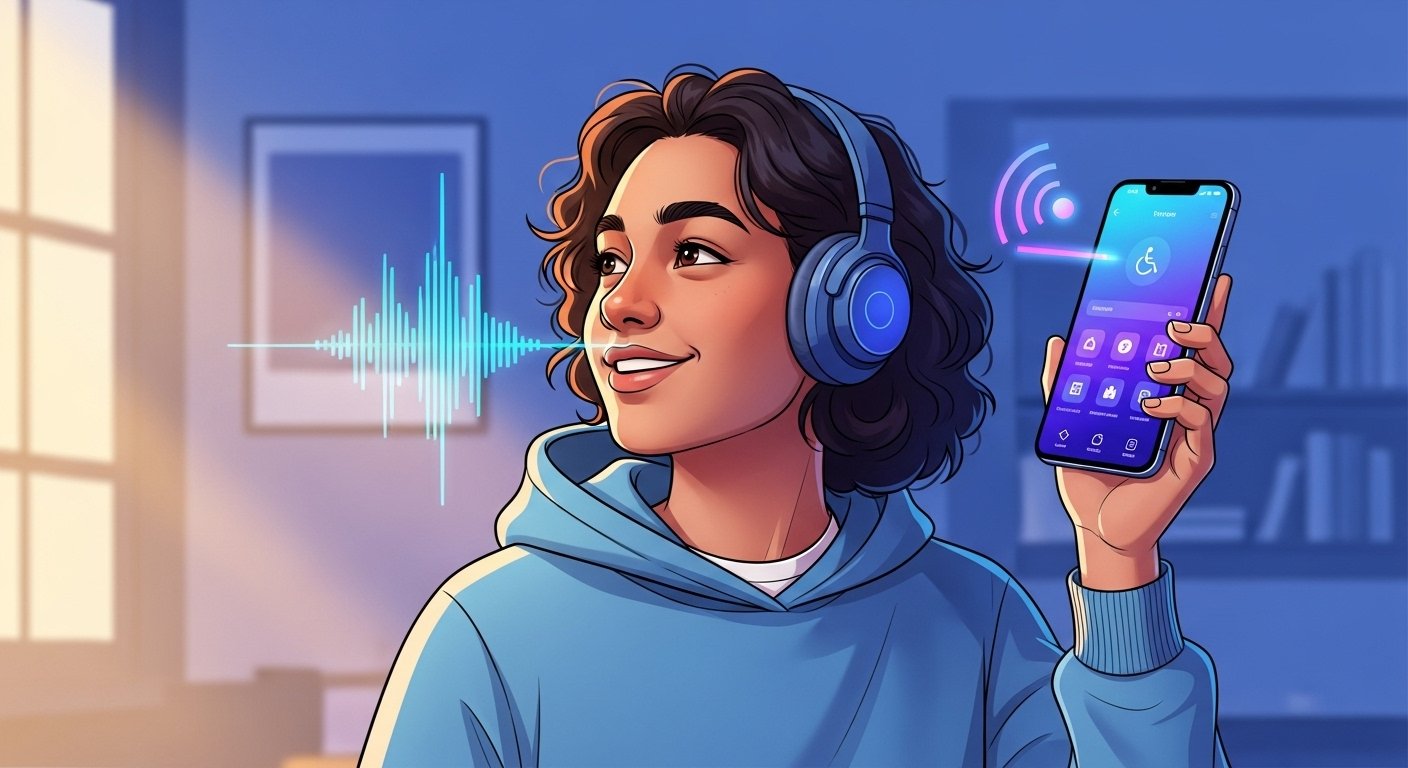
How Text-to-Speech Is Changing Lives for the Visually Impaired
Introduction
In a world driven by digital information, access to written content is essential for education, employment, and everyday living. However, for individuals who are visually impaired, reading traditional text can be a major challenge. This is where Text-to-Speech (TTS) technology is making a life-changing impact.
Text-to-Speech converts written text into spoken words using advanced artificial intelligence. What was once a simple accessibility tool has now evolved into a powerful solution that empowers visually impaired individuals to live more independent, informed, and connected lives.
In this blog post, we’ll explore how TTS is transforming the lives of visually impaired people, its real-world applications, and why it is becoming an essential part of modern accessibility.
Understanding the Challenges of Visual Impairment
Before diving into the benefits of TTS, it’s important to understand the challenges faced by visually impaired individuals.
Many daily tasks rely heavily on reading, such as:
Checking messages and emails
Reading books and documents
Navigating websites and apps
Understanding product labels
Without assistance, these tasks can become difficult or even impossible. Traditional solutions like Braille are helpful but limited in availability and speed.
This is where TTS bridges the gap.
What is Text-to-Speech for Accessibility?
Text-to-Speech for accessibility is designed to convert digital text into audio so that visually impaired users can listen instead of reading.
It works across multiple platforms, including:
Smartphones
Computers
Websites
Applications
With just a tap or command, users can hear content read aloud in a clear and natural voice.
1. Enabling Independent Access to Information
One of the biggest advantages of TTS is independence.
Visually impaired users no longer need someone else to read for them. They can:
Listen to news articles
Access emails and messages
Read books and documents
This independence boosts confidence and allows individuals to stay informed without relying on others.
2. Improving Education Opportunities
Education becomes more accessible with TTS.
How It Helps Students:
Converts textbooks into audio
Reads study materials aloud
Supports learning at individual pace
Students with visual impairments can now participate more actively in classrooms and online learning environments.
3. Enhancing Employment Opportunities
TTS is opening new doors in the workplace.
Benefits for Professionals:
Access to digital documents
Ability to review reports and emails
Improved productivity
With TTS, visually impaired individuals can perform tasks more efficiently and compete equally in professional environments.
4. Simplifying Everyday Tasks
TTS makes daily life easier and more manageable.
Examples:
Reading text messages and notifications
Listening to navigation instructions
Understanding product details while shopping
These small conveniences add up, making everyday activities smoother and less stressful.
5. Supporting Smartphone Accessibility
Modern smartphones come with built-in TTS features such as screen readers.
Key Features:
Voice feedback for touch interactions
Reading on-screen text aloud
Voice navigation
This allows visually impaired users to fully utilize smartphones, from social media to online banking.
6. Expanding Access to Digital Content
The internet is full of valuable information, but not all of it is accessible.
TTS helps by:
Reading website content aloud
Converting PDFs and documents into audio
Making blogs and articles accessible
This ensures that visually impaired users can explore the digital world without barriers.
7. Promoting Social Inclusion
TTS helps visually impaired individuals stay connected with society.
How:
Access to social media platforms
Participation in online communities
Communication through messaging apps
This reduces isolation and promotes a sense of belonging.
8. Providing Multilingual Support
Many TTS tools support multiple languages, allowing users to:
Listen to content in their native language
Learn new languages
Access global information
This is especially helpful in diverse and multilingual environments.
9. Offering Customization for Better Experience
Modern TTS systems allow users to customize their experience.
Options Include:
Voice type (male/female)
Speech speed
Pitch and tone
This flexibility ensures that users can choose what works best for them.
10. Reducing Dependence on Braille
While Braille remains important, it has limitations such as:
Limited availability of materials
Slower reading speed
Learning curve
TTS complements Braille by providing faster and more flexible access to information.
Real-Life Impact of TTS
TTS is not just a tool—it’s a life-changing technology.
Real-Life Scenarios:
A student listening to textbooks and excelling in exams
A professional managing emails independently
An individual navigating the city using voice directions
These examples highlight how TTS empowers individuals to live more independent and fulfilling lives.
Challenges and Limitations
Despite its benefits, TTS still faces some challenges:
❌ Accuracy Issues
Some words or names may be mispronounced.
❌ Emotional Expression
Voices may lack emotional depth.
❌ Accessibility Gaps
Not all websites and apps are fully optimized for TTS.
However, continuous advancements in AI are improving these limitations.
The Future of TTS in Accessibility
The future of TTS is incredibly promising, especially for accessibility.
Upcoming Innovations:
🧠 More natural and expressive voices
🎭 Emotion-aware speech
🗣️ Personalized voice assistants
🌐 Better integration with all digital platforms
As technology evolves, TTS will play an even bigger role in creating an inclusive world.
Conclusion
Text-to-Speech is transforming the lives of visually impaired individuals by breaking down barriers and creating new opportunities. From education and employment to daily tasks and social interaction, TTS empowers users to live independently and confidently.
In a world where information is power, TTS ensures that no one is left behind. It is not just a convenience—it is a necessity for building a more inclusive and accessible future.
FAQs
1. Is Text-to-Speech helpful for blind users?
Yes, it is one of the most important tools for accessibility.
2. Can TTS replace Braille?
No, but it complements Braille by providing faster access to information.
3. Is TTS available on smartphones?
Yes, most smartphones have built-in TTS features.
4. Does TTS work offline?
Some apps offer offline functionality, but many require internet access.